
Remember when the fix for stubborn Nintendo cartridges was just to blow on them? That was our DIY tech support back then.
Cartridge refuses to load? Blow gently. Still no luck? Blow harder.
If that didn't work, a firm smack on the console was the next step.
Back then, we felt pretty tech savvy.
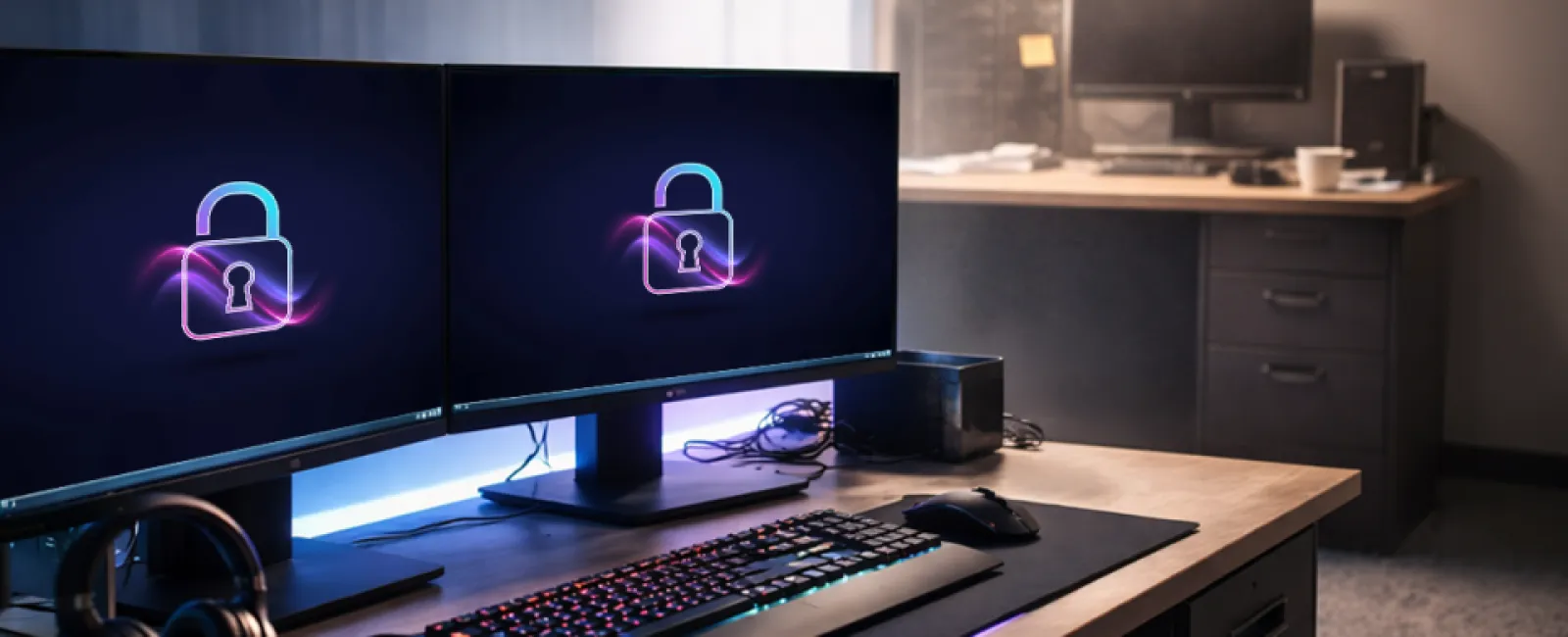
But today's kids? They've never had to hit their devices to fix a problem. Their bedroom setups boast solid-state drives, 32GB of RAM, powerful processors capable of rendering full films, mesh Wi-Fi eliminating dead zones, real-time system monitoring, and multi-factor authentication securing every login.
Every component is fine-tuned, optimized, and constantly maintained.
Now, look over at your workspace.
You might find a 2019 workstation that takes an agonizing four minutes to boot, a printer jamming like clockwork every Tuesday, shared folders named "New New Final FINAL," clashing software platforms, Wi-Fi dropping in the conference room, and a laptop with a "Restart to update" alert ignored for weeks.
Gamers optimize constantly. Businesses often just endure.
And that gap is costing more than you might think.
Why Gamers Always Have The Edge
It's not about spending more. A decent gaming PC costs roughly the same as business workstations. Business internet speeds are typically better than residential. Tools for network security and monitoring are affordable.
The real difference? Focus.
Gamers update every piece of software instantly - OS patches, GPU drivers, game firmwares - driven by the fear of lag and losing. Your kid probably installed an update at 11:30 PM on a school night just because they couldn't wait.
Meanwhile, your office laptops sitting with postponed updates are open doors to vulnerabilities. The fixes exist, but they haven't been applied yet.
Gamers religiously back up their progress. One lost 200-hour save file is enough discipline. Yet, Nationwide Insurance reports nearly 68% of small businesses lack a formal disaster recovery plan. A gamer losing data loses game progress; your business risks losing critical client info, finances, and potentially your ability to operate.
Gamers monitor performance in real time - CPU temps, frame rates, network ping. A slight dip triggers immediate troubleshooting. Business owners often only learn of issues when someone complains, "The internet is slow today." That's reactive, not proactive.
Your kid would never tolerate inefficiencies like these in their setup - and yet, their system doesn't pay salaries.
How Office Tech Gets Messy
No one purposely builds a chaotic office network.
Business tech tends to grow organically. New tools are added to solve immediate problems - accounting platforms, CRM software, file sharing systems, payroll tech, then security layers.
Each solution made sense at the time, but over time, this accumulation creates complexity and friction.
Game rigs, by contrast, are crafted with precision for peak performance. Business systems often evolve for convenience instead of strategy - an accident waiting to happen.
When we reminisced about blowing on cartridges, ignorance was understandable. Your business now has access to the expertise and tools it needs. The only question is whether anyone's paying attention.
The Hidden Price of Tolerating Lag
The true cost doesn't come as dramatic system crashes. It shows up as small, daily inefficiencies everyone accepts.
Those lost minutes add up - waiting five minutes for slow logins, searching for misplaced files, double-entering data into systems that don't communicate, rebooting machines twice a week, relying on workarounds because "that's just how it works here."
A UC Irvine study finds it takes an average of 23 minutes to recover focus after an interruption. Those five-minute glitches effectively cost nearly 30 minutes.
Multiply by your team, five days a week, all year long. This adds up to thousands of lost productive hours hiding right in plain sight.
In gaming, lag is unacceptable. In business, it becomes routine. And "routine" is the most expensive problem in technology.
The Real Question Your Business Should Ask
When asked about their tech, most business owners say "it works fine."
But "working" is very different from "working efficiently."
Are your applications truly integrated, or just coexisting? Do your systems function seamlessly or are they stacked and cluttered? Are your workflows streamlined or built around workarounds? Who's watching your network with the vigilance a gamer shows their frame rates - proactively, continuously, before issues arise?
Hardware evolves, but true productivity and profitability now depend on smart software, automation, security, and workflow design - none of which improve by themselves.
Test Your Tech Awareness
Before you finish reading, consider these questions:
· Do you know when the oldest workstation in your office was purchased?
· Can you confirm if backups completed successfully last week?
· Is there any device on your network with a pending update overdue by more than a week?
· Could you state your office internet speed off the top of your head?
Your kid could answer all these in a snap about their gaming setup.
If you can't confidently answer these about your business systems, it's not a failure - just a sign that no one's focusing on it. And that's a fixable issue.
How We Help
We guide businesses from tech accumulation to smart optimization by evaluating your entire technology landscape—identifying redundancies, outdated tools, bottlenecks, and opportunities for simplification or automation.
Our goal isn't more technology—it's smarter, more effective technology.
If you'd like to explore how your current systems and workflows impact your productivity and profitability—or where hidden inefficiencies might be draining resources—we're ready to talk.
No tech jargon. No pressure. And no gamer analogies needed.
Click here or give us a call at 816-238-3777 to schedule your free 15-Minute Discovery Call.
If this article reminded you of a business owner burdened by avoidable lag, feel free to share it.
Because in both business and gaming, performance is everything.